
AI Pilot-to-Production

The pilot works. What will it take to operate it?

Turn proof-of-concept success into a credible plan for reliable, governed and sustainable operational use.

AI Pilot-to-Production

The problem

A pilot can work with a small team and carefully selected data while leaving production questions unanswered. Integration, access, evaluation, support, cost and workforce adoption often become visible only when wider use begins.
The outcome

A production-readiness decision and transition plan that connects business value, enterprise architecture, assurance and operational ownership.

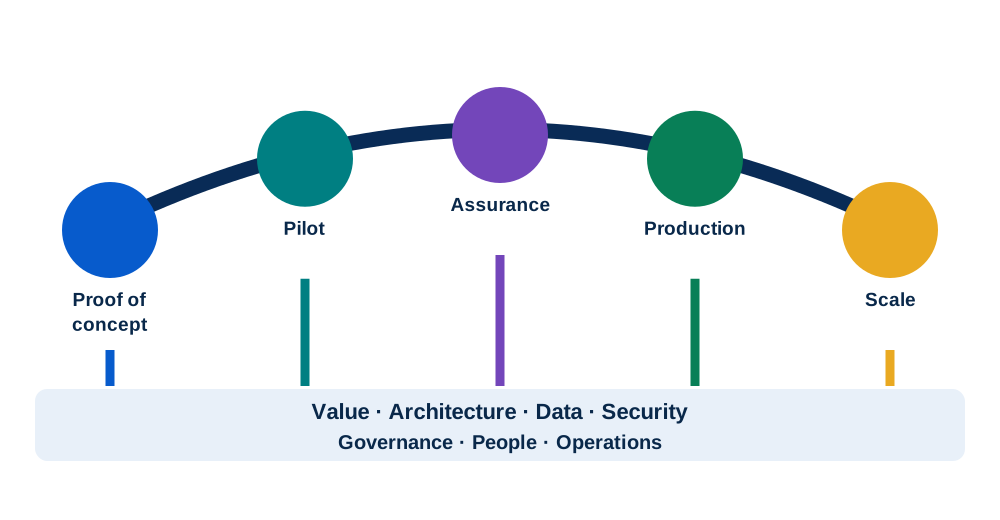
From pilot evidence to operational capability

Who it is for

AI sponsors, product and service owners, technology leaders and delivery teams preparing to move a promising pilot into a live operating environment.

When to use it

Before scaling a pilot; when production approval is stalled; or when a working technical solution lacks the business, architecture and operating arrangements required for sustained use.

How we work

Reconfirm the value hypothesis and pilot evidence. Examine the target operating context. Identify gaps across architecture, information, controls, people and support. Agree the transition decisions, evidence and accountable owners.

Key activities

Review benefits and lifecycle cost; clarify data and integration requirements; examine security and privacy dependencies; define evaluation and monitoring needs; shape human oversight, support and incident responsibilities; plan staged rollout, rollback and adoption.

What you receive

A production-readiness assessment; target and transition architecture views; requirements and dependency map; evaluation and acceptance criteria; operating ownership and support model; assurance actions; and a phased mobilisation roadmap.

Why it matters

Give sponsors and delivery teams a shared basis for proceeding, proceeding with conditions or doing further work. Make the ongoing effort visible before committing to scale.

Government application

Support an agency-led transition using relevant DTA technical guidance and existing security, privacy, procurement and assurance processes. Keep public value, service impact and accountable use central.

Enterprise application

Connect the pilot to enterprise platforms, trusted information, integration, operating cost and customer or workforce outcomes. Identify which components and controls can be reused.

NFP / for-purpose application

Check affordability, staff support, accessibility, supplier dependence and service continuity. Prioritise a manageable operating model over unnecessary technical complexity.

Our role in delivery

Novatecno leads advisory, requirements, architecture, assurance coordination and mobilisation planning. Engineering, configuration, specialist testing and managed operations are agreed separately with your delivery teams or appropriate partners.

Your natural next step

Use AI Assurance for a defined decision review, or the Assured AI Transformation Accelerator to coordinate the transition. Ongoing advisory can support decisions as delivery progresses.

Practical artefacts for the next decision

Choose the outputs that the agreed scope needs. Each should make a decision, responsibility or next step clearer.

A production-readiness assessment

Target and transition architecture views

Requirements and dependency map

Evaluation and acceptance criteria

Operating ownership and support model

Assurance actions

And a phased mobilisation roadmap

Your next decision

A useful conversation starts
with your challenge.

You do not need a finished brief.

Discuss your pilot